Mentorship, Excellence, and Innovation: Next Gen Science Club

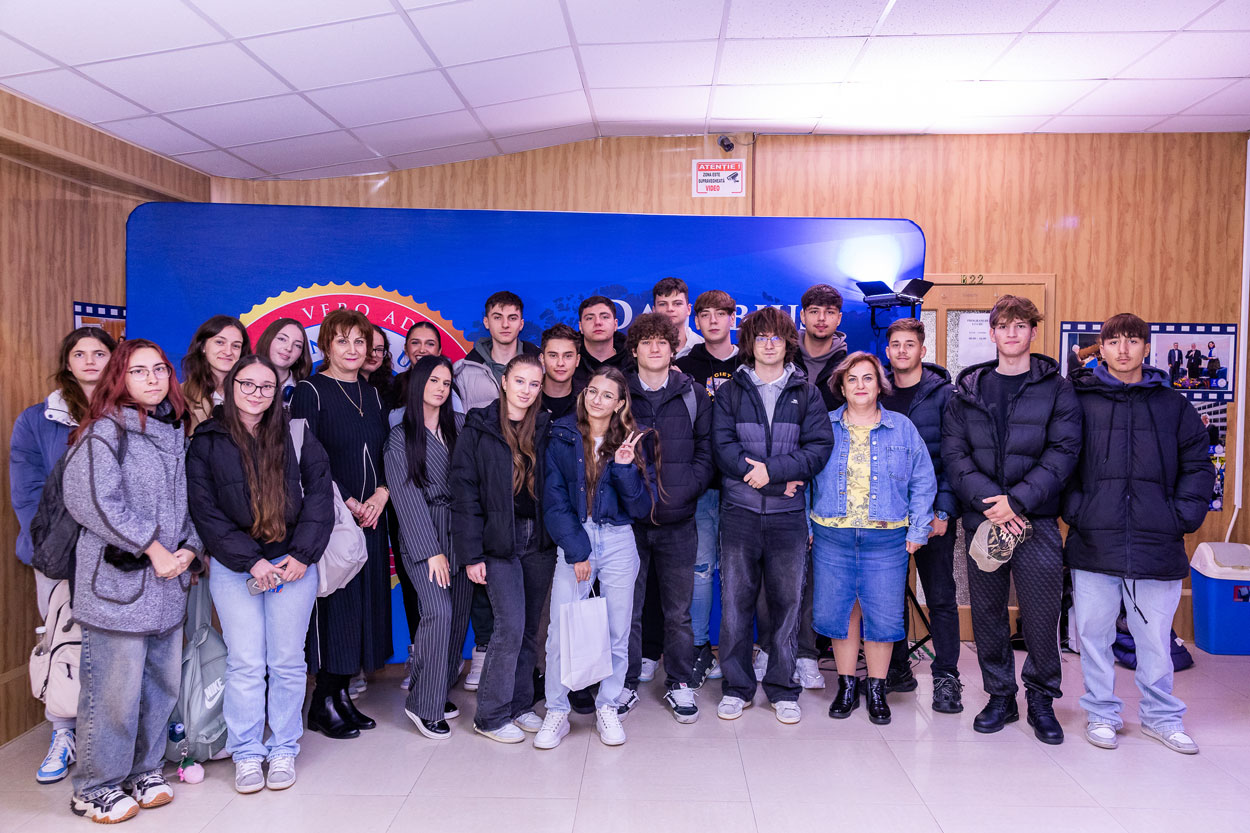
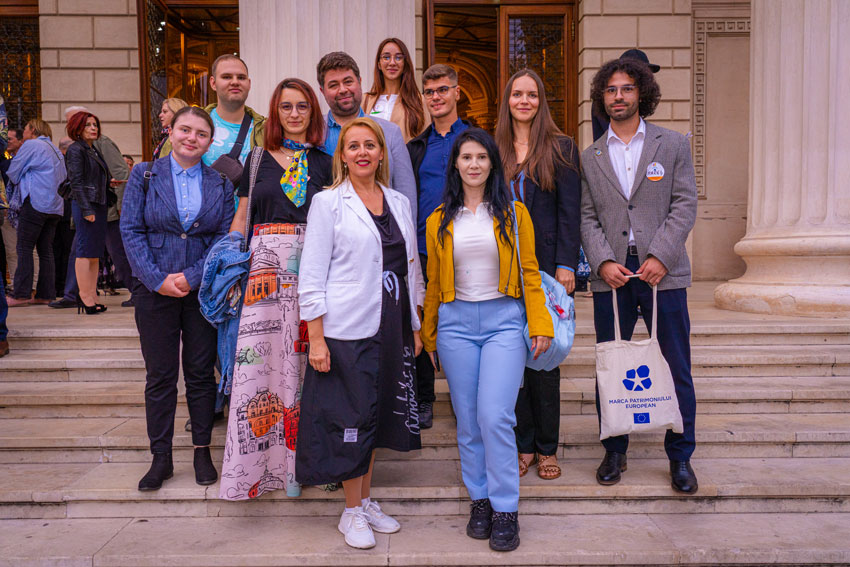
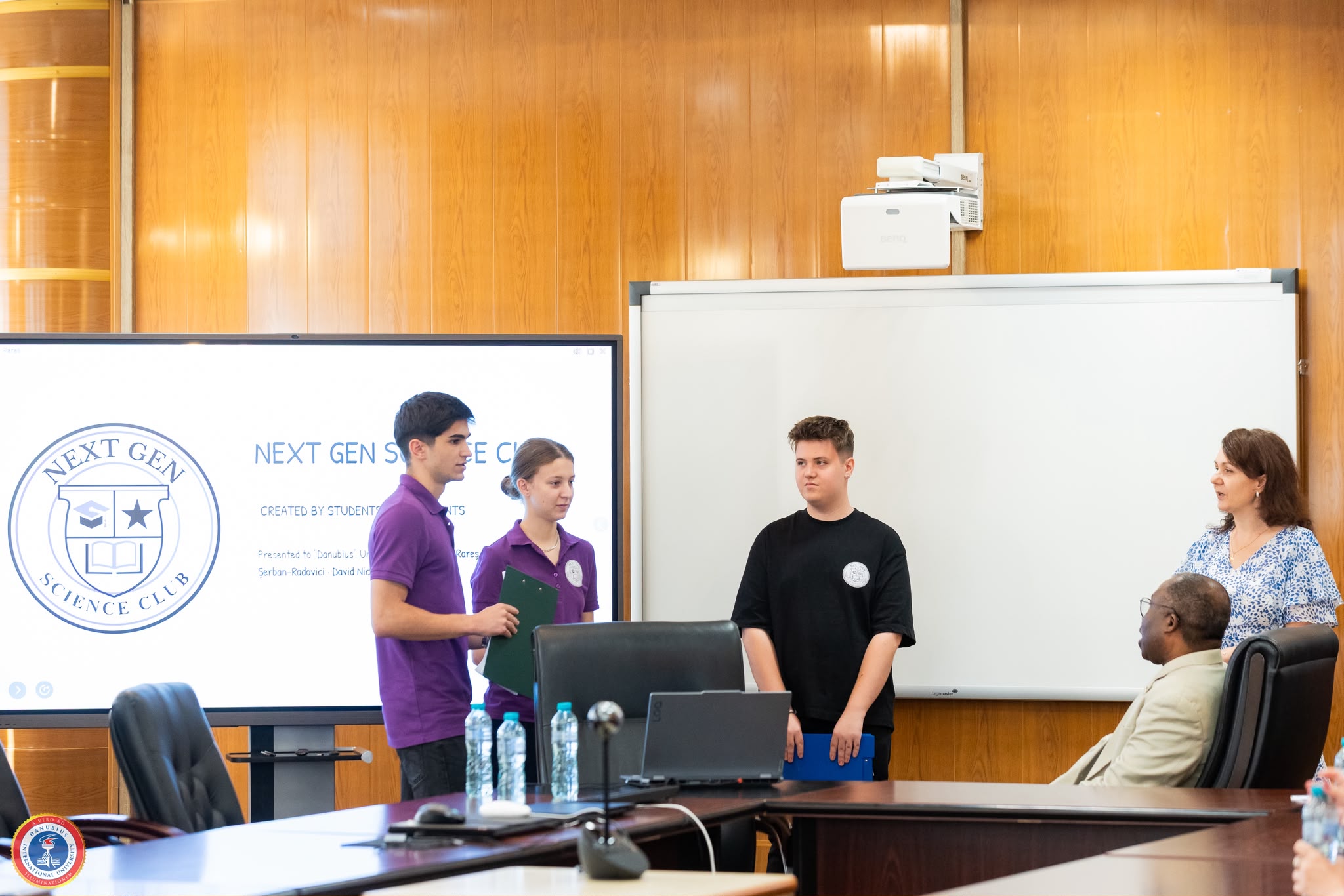
Danubius International University was pleased to host the presentation of the educational project “Next Gen Science Club,” an initiative founded in Galați by three young international Olympiad participants and graduates of prestigious local high schools: “Vasile Alecsandri” National College and “Costache Negri” National College. Alesia Șerban-Radovici, Rareș Mihaescu, and David Nicodim aim to develop an educational community for learners of all ages, united by a shared passion for science, knowledge, and academic excellence. Through activities tailored to individual needs, the club seeks to provide specialised mentorship, stimulate intellectual curiosity, and encourage young people’s engagement with mathematics, physics, and astronomy.


At the same time, the project promotes interactive learning, practical experimentation, and collaboration through projects focused on addressing real-world challenges. Danubius International University supports this valuable initiative and expresses its willingness to encourage activities that contribute to the development of future researchers, innovators, and critical thinkers.


Claudia Covaliov


Dr. Steve O. Michael, Rector & CEO of DIU, about “Artificial Intelligence in Education: Solutions with Problems"

On June 10, the 6th edition of the Universities Conference took place: "Artificial intelligence in education - solution or problem?", organized by DC MEDIA, within the University of Agronomic Sciences and Veterinary Medicine in Bucharest. The event was a good opportunity for the Rector of Danubius International University, Dr. Steve O. Michael, to present the paper "Artificial Intelligence in Education: Solutions with Problems", which contains the latest information on the impact of AI in university education.

That artificial intelligence (AI) will impact teaching and learning is indisputable. This paper briefly summarizes the positive impact and the negative consequences of AI in education. Of greater interest are the possible neurodegenerative impacts of generative AI and the implications for formal education

The potential benefits and impacts of AI in education are still being debated. However, a few claims can be made. When asked, AI itself highlights a few of the benefits. Drawing on personal experience using AI to study Romanian, I can testify that it provides personalized learning, access to lessons regardless of time or place, faster feedback, adaptation to my progress, and accelerated learning. Education for the mass production of credentialed people for jobs, delivered in the most efficient manner possible Education for self-discovery in preparation for life and societal.

Increasingly, technology in education reduces the level of physical interactions between student and teacher. A large-scale implementation of AI in education is expected to further reduce human interactions, a trend that some fear will further complicate the growing challenges of mental health.

The more we advance in the use of technology in education, the more vulnerable our privacy becomes. Artificial intelligence further deepens this vulnerability. Some would say that it is naive to think that there is any privacy left in 2026, in the age of ubiquitous electronic information. With all of our personal data, health data and personal communications transmitted and stored digitally, and hackers becoming more sophisticated every day, the assumption of privacy is naive.

Some of the paper's conclusions speak to the benefits, but also the danger, of the increasing use of AI: “There is no doubt that AI is here to stay, and some will say that we are just at the beginning stages of its revolution. Based on what we know so far, it is reasonable to conclude that artificial intelligence is a solution, though it comes with myriad problems. With its ability to mimic human intelligence, AI is perhaps the most powerful invention of humankind to date. Individual educators’ predispositions toward AI adoption are shaped by assumptions about how students learn and the role of education. Those who favor faster, more efficient production are inclined to jump on the AI bandwagon, whereas those who view school as a nurturing place and teaching and learning as an intimate transaction and interaction between humans are likely to be wary of AI's potential impacts in education. The benefits being touted by AI experts include its ability to individualize and personalize learning, provide faster feedback, and solve complex problems. These benefits come at a cost. 15 Beyond the financial cost, the loss of privacy, the diminishing human interaction, and the impact on the environment compel a serious evaluation of the cost-benefit of AI. The most important impact that warrants collective attention is degenerative neuro-function, as mental and physical skills atrophy. As AI replaces mental effort, we must be concerned about cognitive offloading, social offloading, and nomophobia, to name a few.”

The paper can be downloaded here: https://univ-danubius.ro/AI-in-education


Oana Sacalov


The School of International Governance and Law Announces the Participation of its Dean in a Prestigious International Webinar on Algorithmic Societies

The School of International Governance and Law of Danubius International University is honoured to announce the participation of Associate Professor Cristina Elena Popa Tache, PhD, Dean of the School, as an invited speaker at the international webinar “Synthetic Societies: Human Vulnerability and Systemic Fragility in a Context of Rising Algorithmic Power”, organised on 3 July 2026 by EXTRA WAAS – Existential Threats and Risks to All and CIRET – Centre International de Recherches et Études Transdisciplinaires.

The event brings together leading international experts in artificial intelligence, global governance, cybersecurity, transdisciplinarity, and existential risk studies to examine the impact of growing algorithmic power on contemporary societies and emerging forms of human vulnerability.

Moderators:

  • Prof. Dr Thomas Reuter (Australia), Chair of EXTRA, University of Melbourne and World Academy of Arts and Science;
  • Florent Pasquier (France), President of CIRET and Professor at Sorbonne Université.

Speakers:

  • Jerome C. Glenn (USA), CEO of The Millennium Project and Chair of the AI Advisory Committee to the United Nations General Assembly;
  • Prof. Dr Thomas Reuter (Australia);
  • Dr Mirella Tarmure Vadean (Canada), Université de l’Ontario Français;
  • Bacely YoroBi (USA/Côte d’Ivoire), Founder and CEO of Scorton;
  • Associate Professor Cristina Elena Popa Tache, PhD (Romania), Dean of the School of International Governance and Law and Director of the CIRET Paris Observatory of Law and Transdisciplinarity;
  • Kiriti Prasad Choudury (Bangladesh), AI, IT and Data Analytics Specialist within EXTRA.

The welcome address will be delivered by Garry Jacobs, President and CEO of the World Academy of Arts and Science (WAAS), an international academic organisation situated at the highest level of the global academic community dedicated to the study of major global challenges.

The participation of the School of International Governance and Law in this event represents a commitment to being present where the most significant international debates are taking place. At the same time, the presence of the School’s Dean alongside globally recognised academic and professional figures contributes to strengthening the international visibility of Danubius International University, fostering research partnerships, and affirming the institution as a relevant actor in the global dialogue on technological transformations and their implications for law, society, and governance.

The academic and professional community is warmly invited to follow this exceptional event and to engage in the discussion of one of the most important issues of our time: the relationship between algorithmic power, human vulnerability, and the resilience of future societies.


16th International Conference The Danube - Axis of European Identity

Danubius International University June 29, 2026

organized by Danubius International University, Romania, in collaboration with its Co-Organizing Institutions, which will take place both online (via ZOOM) and onsite at the Danubius International University, on June 29, 2026.

CO-ORGANIZING INSTITUTIONS:
Danubius International University, Romania

Romanian-American University, Romania

“Alexandru Ioan Cuza” Police Academy, Romania

Moldova State University, Republic of Moldova

“Ion Creanga” State Pedagogical University of Chisinau, Republic of Moldova

“Bogdan Vodă” University of Cluj-Napoca, Romania

“Ion Ionescu de la Brad” Iasi University, Romania

"B. P. Hasdeu" Cahul University Center of the Technical University of Moldova, Republic of Moldova

Free International University of Moldova, Republic of Moldova

Newton University, Czechia

University of Ruse “Angel Kanchev”, Bulgaria

Izmail State University of Humanities, Ukraine, Ukraine

Educons University, Serbia

Çanakkale Onsekiz Mart University, Turkey

UNEC Women Researchers’ Council, Romania

University of European Studies of Moldova, Republic of Moldova


It is a one-day international conference that will bring together a diverse range of participants from universities, the business sector, and public authorities.
 
We hope you will be able to join us as a participant and spread the word among your colleagues and other professional contacts.


THEMATIC AREAS

1. Danubian Economics

2. Danubian Legislation

3. Local Communities – Diachrony and Synchrony

4. European Construction between Desideratum and Realities


All accepted papers will be published in the Journal of Danubian Studies and Research, under ISSN: 2284 – 5224 reference, and included in international databases.

Details about the content of the conference, the facilitators, the financial conditions, and the deadlines for registration can be found on the 2026 DAIE International Conference website.

To register and submit your abstract for the conference, please click, create an account, and follow the steps outlined in the submission guide.


DEADLINES:

Preliminary Abstract Submission: 22nd June 2026
Final paper Submission for the journal: 31st July 2026

For further details visit our website DAIE 2026.


FEES

Participant Category

Publication Fee

External Participants

100 EUR

DIU Partners

40 EUR

DIU Students

0 EUR


AUTHOR'S GUIDELINES

On behalf of the hosting institution, I cordially welcome you to join our 

2026 DAIE International Conference!

  For any further information or questions, please do not hesitate to contact us by email at This email address is being protected from spambots. You need JavaScript enabled to view it..  


Recent News

© 2026 Danubius International University. All Rights Reserved.