ROMÂNĂ
  ENGLISH VERSION




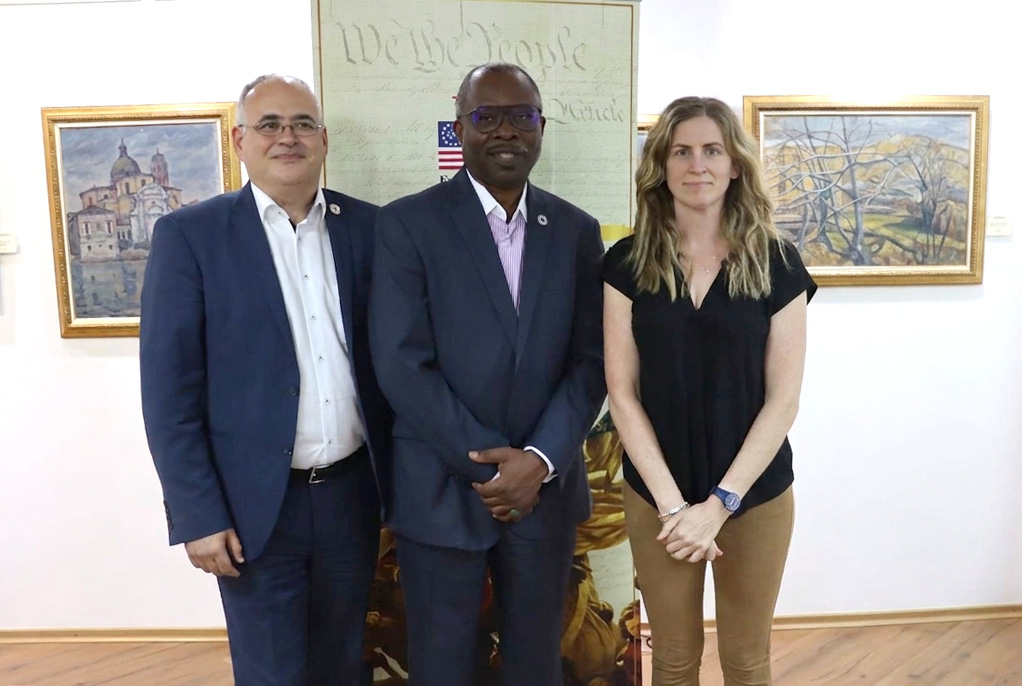
Within the symbolic academic–cultural partnership established by the Faculty of Law and International Governance, represented by its Dean, Assoc. Prof. PhD Cristina Elena Popa Tache, with Professor Norman Cornett, an internationally recognised curator and promoter of intercultural dialogue through art and humanistic education, member of CIRET Paris, the academic community’s attention is drawn to a new landmark event, relevant to legal culture and transdisciplinary education.
The Faculty consistently assumes the role of institutional supporter of the academic and cultural initiatives promoted within this partnership, facilitating their dissemination through its institutional channels, with the aim of broadening students’ educational horizons and strengthening a form of legal education sensitive to the human, historical and cultural dimensions of legal norms.
In this context, the following cultural event integrated within the partnership is presented:
Black History Month Exhibit – Congolese Montreal artist paints to ‘say something about the world’
Curated by Norman Cornett, the exhibition offers a reflection on historical memory and the cultural roots of the Afro-descendant condition. The curator emphasises the importance of returning to sources and origins in understanding history and identity:
“When we speak about Black History Month, what matters most is returning to origins, to roots, to Africa as the very fountainhead of Afro-descendant history and culture.”
The event is open to the general public, runs daily from 14–27 February, and the official opening will take place on 19 February at 5:00 pm.
Further details are available at:
https://montreal.citynews.ca/2026/02/12/congo-montreal-artist-paintings-exhibit/
For students of Law and International Governance, this type of event represents a foundational formative exercise that transcends the boundaries of a single discipline and nurtures intellectual curiosity and critical spirit. It demonstrates how legal norms, when sensitive to culture, memory and human dignity, can prevent conflicts and contribute to avoiding injustice from the deepest layers of the legislative system.
By integrating this event within the academic–cultural partnership, the Faculty reaffirms its commitment to transdisciplinary, humanistic and responsible legal education, adapted to the realities of contemporary society.