Academic Excellence and International Dialogue at the 16th International Conference “The Danube – Axis of European Identity”

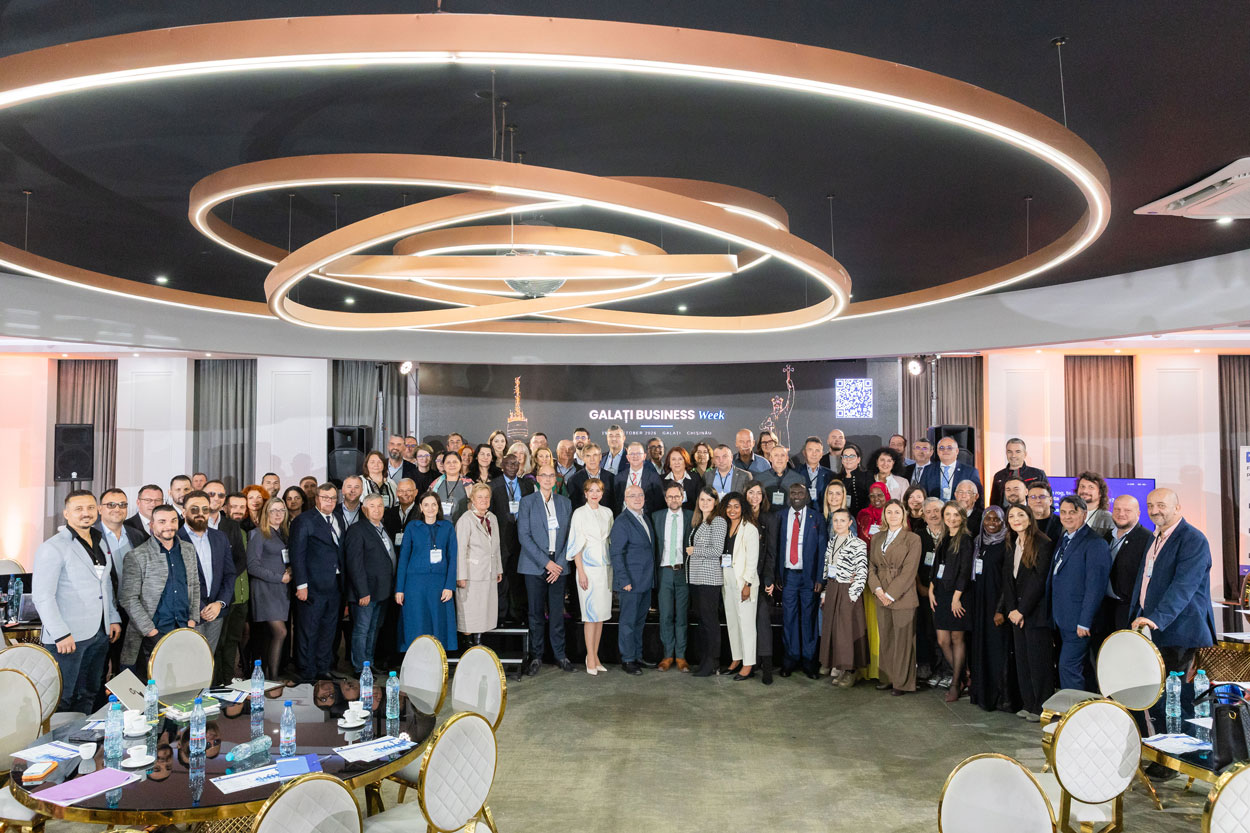
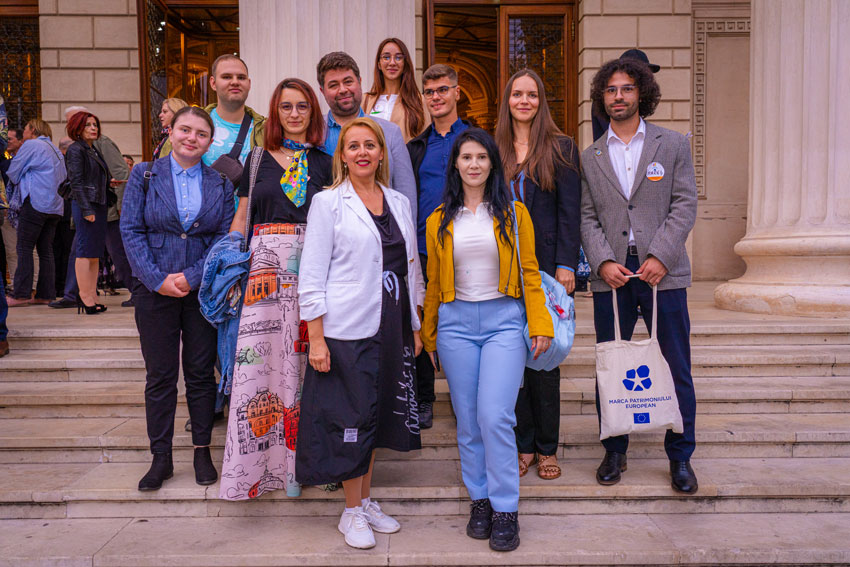
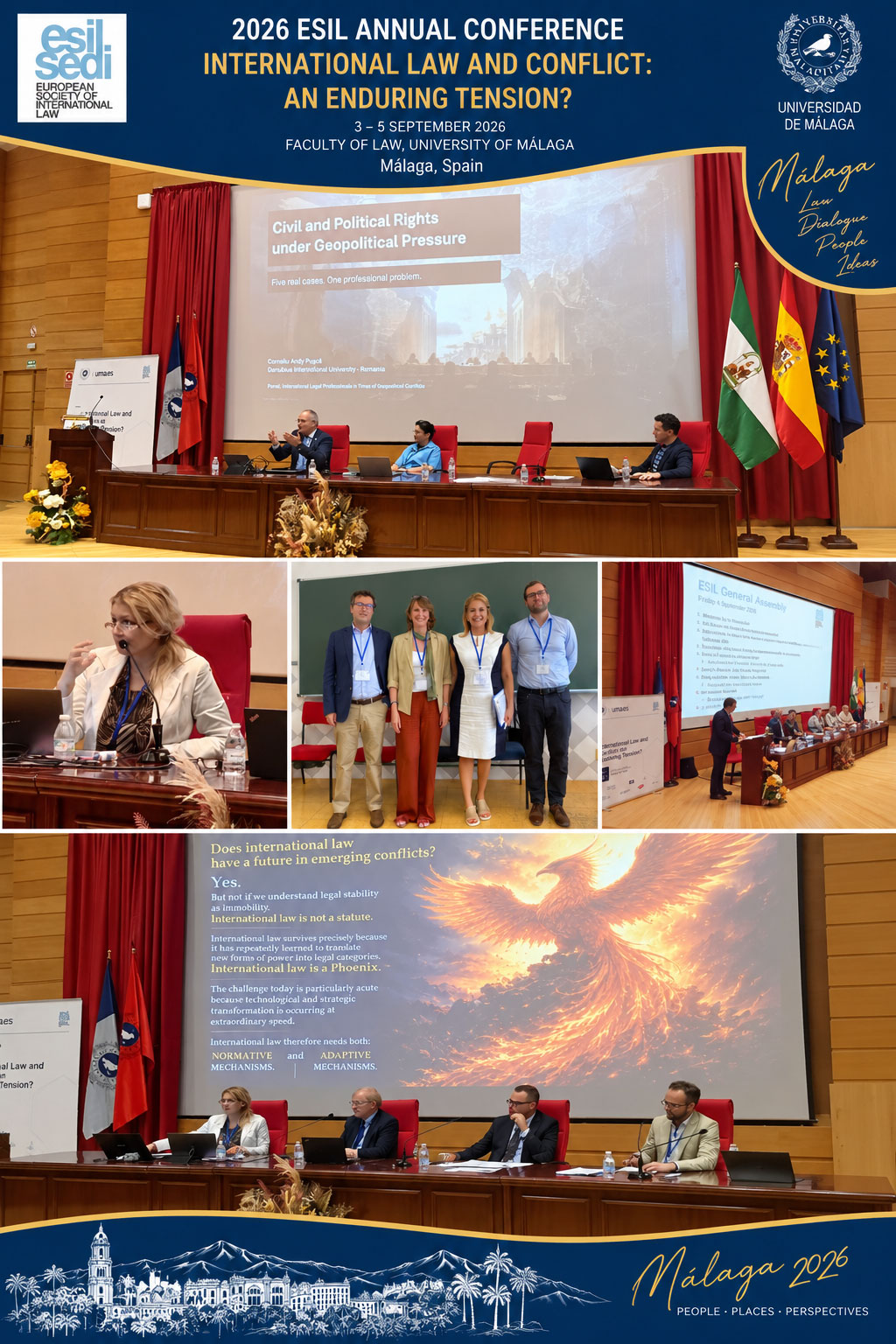
The 16th International Conference “The Danube – Axis of European Identity”, held on 29 June 2026 under the auspices of Danubius International University, brought together researchers, academics, and experts from numerous higher education and research institutions across Romania and abroad, further strengthening the conference's reputation as a distinguished interdisciplinary platform dedicated to the study of the Danube region and the construction of European identity. The conference programme featured an opening plenary session followed by four thematic panels—Danubian Economics, Local Communities – Diachrony and Synchrony, European Construction between Desideratum and Realities, and Danubian Legislation—within which participants presented scholarly contributions addressing the economic, social, cultural, legal, and geopolitical dimensions of the Danube region and the ongoing processes of European integration.

The conference was officially inaugurated by Dr. Steve O. Michael, Rector & CEO of Danubius International University, Dr. Andy Pușcă, President of the University's Administrative Board and dr. Emanuel Marinescu, Director for Global Engagement and Recruitment, whose opening addresses underscored the importance of international academic cooperation and the advancement of interdisciplinary research in fostering European identity. Through the diversity of its research themes, the high scientific quality of the presentations, and the participation of a significant number of scholars from the international academic community, the 16th edition of the International Conference “The Danube – Axis of European Identity” proved to be a highly successful academic event, making a valuable contribution to the advancement of scholarly dialogue and the strengthening of institutional partnerships across the European Higher Education and Research Area.


Claudia Covaliov


President of the American Romanian Academy of Arts and Sciences to Attend the Danubius International University Graduation Ceremony as Guest of Honor

Danubius International University is honored to welcome Professor Ruxandra Vidu, PhD, President of the American Romanian Academy of Arts and Sciences (ARA), as the Guest of Honor at the 2025–2026 Graduation Ceremony. The American Romanian Academy of Arts and Sciences is an international academic organization dedicated to advancing excellence in research, education, and culture, while fostering scientific cooperation between Romania and the Romanian academic diaspora. Affiliated with the University of California, Davis, Dr. Ruxandra Vidu has built an accomplished academic career in the fields of materials engineering and advanced technologies, earning recognition for her contributions to interdisciplinary research. As President of ARA, she leads initiatives that promote dialogue among researchers, academics, and professionals across a wide range of disciplines, thereby strengthening the presence of the Romanian scientific community within the global academic landscape.

Dr. Vidu's presence will add distinction to the Danubius International University Graduation Ceremony, which will take place on 4 July, beginning at 11:00 a.m., at the Sports Hall in Galați. The participation of an internationally recognized academic leader will serve as a source of inspiration for the graduating class and will further highlight the University's commitment to academic dialogue and collaboration with distinguished figures from the international higher education and research community.


Claudia Covaliov


Mentorship, Excellence, and Innovation: Next Gen Science Club

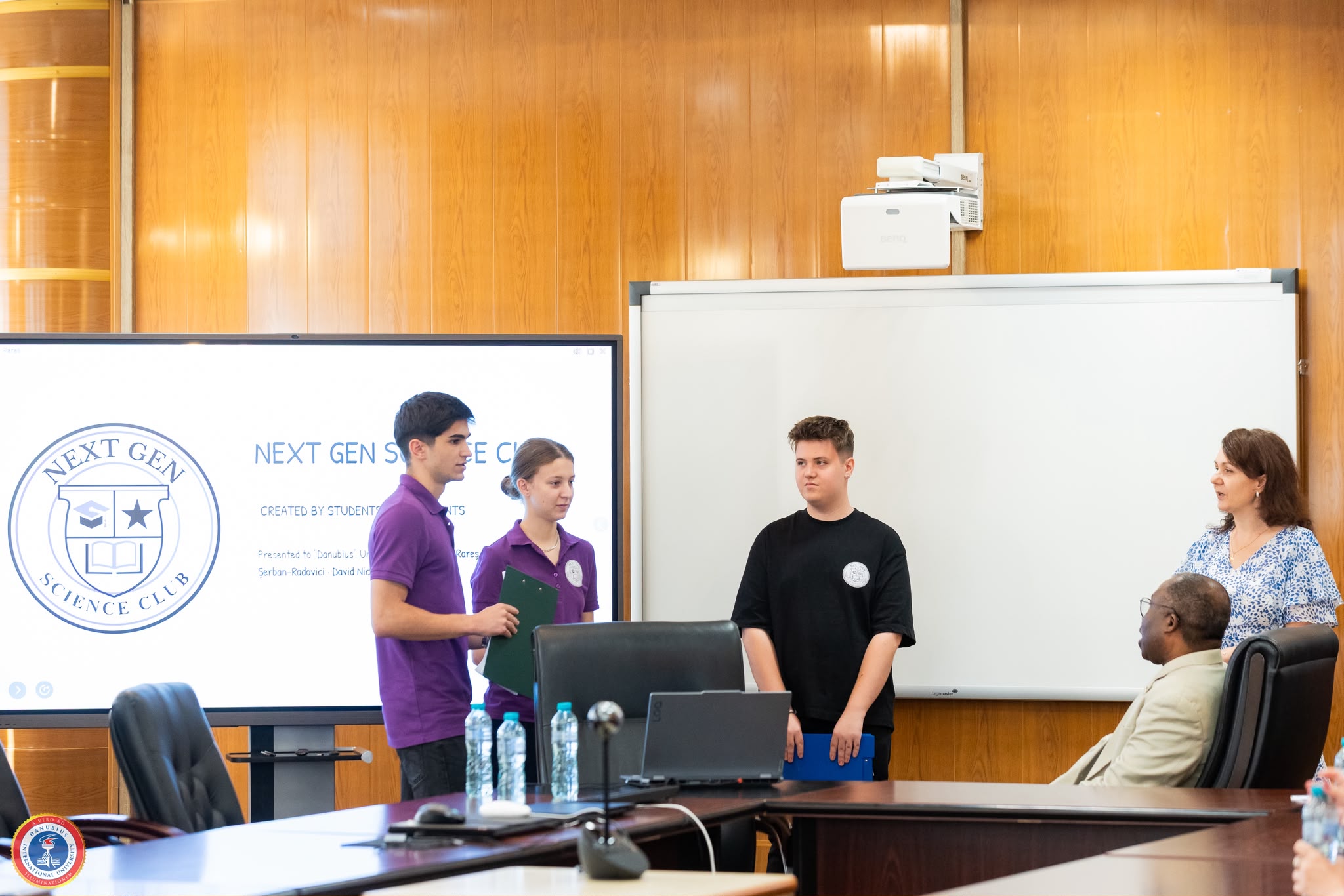
Danubius International University was pleased to host the presentation of the educational project “Next Gen Science Club,” an initiative founded in Galați by three young international Olympiad participants and graduates of prestigious local high schools: “Vasile Alecsandri” National College and “Costache Negri” National College. Alesia Șerban-Radovici, Rareș Mihaescu, and David Nicodim aim to develop an educational community for learners of all ages, united by a shared passion for science, knowledge, and academic excellence. Through activities tailored to individual needs, the club seeks to provide specialised mentorship, stimulate intellectual curiosity, and encourage young people’s engagement with mathematics, physics, and astronomy.


At the same time, the project promotes interactive learning, practical experimentation, and collaboration through projects focused on addressing real-world challenges. Danubius International University supports this valuable initiative and expresses its willingness to encourage activities that contribute to the development of future researchers, innovators, and critical thinkers.


Claudia Covaliov


Dr. Steve O. Michael, Rector & CEO of DIU, about “Artificial Intelligence in Education: Solutions with Problems"

On June 10, the 6th edition of the Universities Conference took place: "Artificial intelligence in education - solution or problem?", organized by DC MEDIA, within the University of Agronomic Sciences and Veterinary Medicine in Bucharest. The event was a good opportunity for the Rector of Danubius International University, Dr. Steve O. Michael, to present the paper "Artificial Intelligence in Education: Solutions with Problems", which contains the latest information on the impact of AI in university education.

That artificial intelligence (AI) will impact teaching and learning is indisputable. This paper briefly summarizes the positive impact and the negative consequences of AI in education. Of greater interest are the possible neurodegenerative impacts of generative AI and the implications for formal education

The potential benefits and impacts of AI in education are still being debated. However, a few claims can be made. When asked, AI itself highlights a few of the benefits. Drawing on personal experience using AI to study Romanian, I can testify that it provides personalized learning, access to lessons regardless of time or place, faster feedback, adaptation to my progress, and accelerated learning. Education for the mass production of credentialed people for jobs, delivered in the most efficient manner possible Education for self-discovery in preparation for life and societal.

Increasingly, technology in education reduces the level of physical interactions between student and teacher. A large-scale implementation of AI in education is expected to further reduce human interactions, a trend that some fear will further complicate the growing challenges of mental health.

The more we advance in the use of technology in education, the more vulnerable our privacy becomes. Artificial intelligence further deepens this vulnerability. Some would say that it is naive to think that there is any privacy left in 2026, in the age of ubiquitous electronic information. With all of our personal data, health data and personal communications transmitted and stored digitally, and hackers becoming more sophisticated every day, the assumption of privacy is naive.

Some of the paper's conclusions speak to the benefits, but also the danger, of the increasing use of AI: “There is no doubt that AI is here to stay, and some will say that we are just at the beginning stages of its revolution. Based on what we know so far, it is reasonable to conclude that artificial intelligence is a solution, though it comes with myriad problems. With its ability to mimic human intelligence, AI is perhaps the most powerful invention of humankind to date. Individual educators’ predispositions toward AI adoption are shaped by assumptions about how students learn and the role of education. Those who favor faster, more efficient production are inclined to jump on the AI bandwagon, whereas those who view school as a nurturing place and teaching and learning as an intimate transaction and interaction between humans are likely to be wary of AI's potential impacts in education. The benefits being touted by AI experts include its ability to individualize and personalize learning, provide faster feedback, and solve complex problems. These benefits come at a cost. 15 Beyond the financial cost, the loss of privacy, the diminishing human interaction, and the impact on the environment compel a serious evaluation of the cost-benefit of AI. The most important impact that warrants collective attention is degenerative neuro-function, as mental and physical skills atrophy. As AI replaces mental effort, we must be concerned about cognitive offloading, social offloading, and nomophobia, to name a few.”

The paper can be downloaded here: https://univ-danubius.ro/AI-in-education


Oana Sacalov


Recent News

© 2026 Danubius International University. All Rights Reserved.